
Introduction to Large Language Models (LLMs)
HUMAINA Labs – Human-Centered AI for Social & Government Intelligence
By: Ali Al Ibrahim and Rob Andvary
Abstract
Large Language Models (LLMs) represent a major breakthrough in artificial intelligence, enabling machines to process, generate, and reason over human language at unprecedented scale. Over the past decade, advances in deep learning, computational power, and data availability have transformed language models from narrow task-specific systems into general-purpose infrastructures capable of supporting decision-making, policy analysis, public services, and social research.
This paper provides an introductory yet rigorous overview of Large Language Models, explaining how they work, why they matter, and how they can be responsibly deployed in government and societal contexts. Special attention is given to ethical considerations, transparency, and human-centered design principles, aligning LLM adoption with public-interest governance frameworks.
1. Introduction
Language is the primary medium through which societies govern, communicate, deliberate, and record knowledge. From laws and policies to census forms, health records, and education systems, language is deeply embedded in public institutions. The emergence of Large Language Models marks a turning point in how institutions can analyze, interpret, and act upon vast amounts of textual information.
Unlike traditional software systems that rely on predefined rules, LLMs learn statistical representations of language from large-scale datasets. This enables them to perform a wide range of tasks, including summarization, classification, translation, question answering, and scenario analysis. For governments and public institutions, these capabilities open new possibilities for evidence-based policymaking, service optimization, and anticipatory governance.
However, the same power that makes LLMs transformative also introduces risks related to bias, opacity, accountability, and misuse. Understanding how LLMs function is therefore a prerequisite for their responsible adoption in sensitive social and governmental domains.
2. What Are Large Language Models?
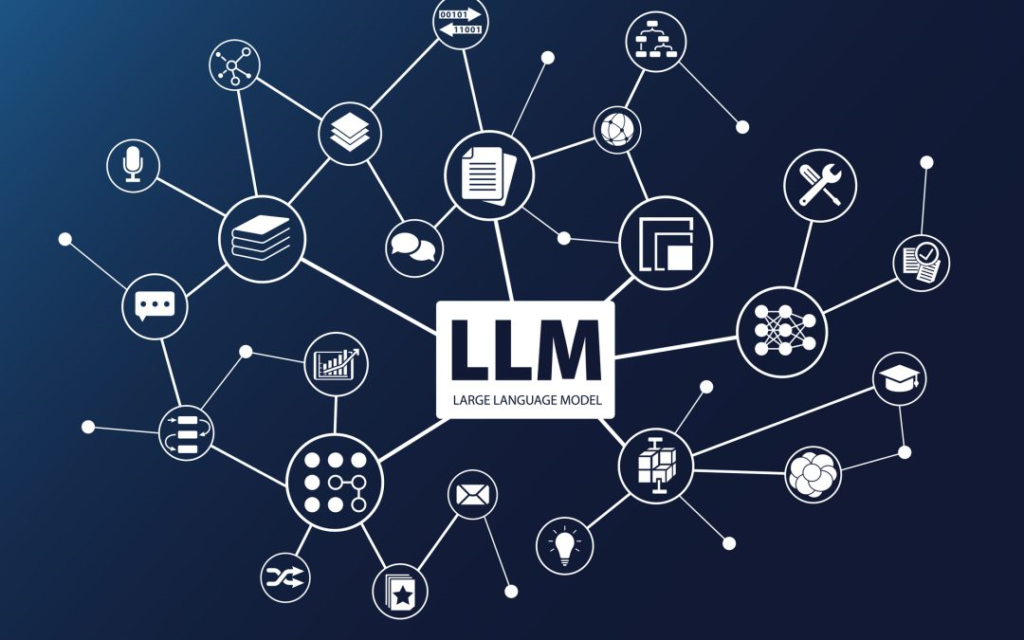
Large Language Models are a class of artificial intelligence systems designed to process and generate natural language using deep neural networks, most commonly based on the Transformer architecture.
At a high level, an LLM is trained to predict the next token (word or sub-word unit) in a sequence, given the preceding context. By repeating this process across massive datasets containing books, articles, reports, and other text sources, the model learns complex patterns in syntax, semantics, and discourse.
Key characteristics of LLMs include:
- Scale: Billions or trillions of parameters that encode linguistic patterns
- Generalization: Ability to perform multiple tasks without task-specific retraining
- Contextual reasoning: Sensitivity to long-range dependencies in text
- Emergent behavior: Capabilities that arise from scale rather than explicit programming
Examples of widely known LLM families include GPT-style models, BERT-based architectures, and instruction-tuned variants optimized for interactive use.
3. How Large Language Models Work
3.1 Transformer Architecture
The core technical foundation of modern LLMs is the Transformer, a neural network architecture that relies on self-attention mechanisms. Self-attention allows the model to weigh the relevance of different parts of a text sequence when generating or interpreting language.
This architecture enables:
- Parallel processing of text
- Efficient handling of long documents
- Rich contextual representations
3.2 Training Process
LLMs are typically trained in two main stages:
- Pre-training:
The model learns general language patterns from large, diverse datasets using unsupervised or self-supervised learning. - Fine-tuning or Alignment:
The model is adapted to specific tasks or norms, often using curated datasets and human feedback to improve usefulness, safety, and reliability.
3.3 Inference and Deployment
Once trained, an LLM can be deployed as:
- A standalone system
- An embedded component in decision-support tools
- A backend service for analytics, simulation, or knowledge retrieval
In institutional contexts, deployment often involves additional layers for access control, auditing, and explainability.
4. Why LLMs Matter for Governments and Society
Large Language Models are not merely technical innovations; they are infrastructural technologies with systemic implications.
4.1 Policy Analysis and Decision Support
LLMs can assist policymakers by:
- Synthesizing large volumes of reports and legislation
- Comparing policy options across jurisdictions
- Simulating qualitative impacts of policy changes
4.2 Public Service Delivery
In public administration, LLMs can:
- Improve citizen-facing services through multilingual support
- Assist caseworkers with document processing
- Reduce administrative burden while maintaining oversight
4.3 Social and Demographic Intelligence
When combined with structured data, LLMs enable:
- Interpretation of qualitative survey responses
- Analysis of public feedback and sentiment
- Contextual explanation of demographic trends
These applications align closely with human-centered approaches to governance, where understanding social dynamics is as important as numerical forecasting.
5. Risks, Limitations, and Challenges
Despite their potential, LLMs pose significant challenges that are particularly acute in government use cases.
5.1 Bias and Representation
Because LLMs learn from historical data, they may reproduce or amplify existing social biases. Without careful design and evaluation, this can lead to unfair or discriminatory outcomes.
5.2 Opacity and Explainability
LLMs are often criticized as “black boxes.” For public institutions, decisions influenced by AI systems must be explainable, auditable, and contestable.
5.3 Hallucinations and Reliability
LLMs can generate fluent but incorrect information. In high-stakes contexts such as healthcare, migration, or social welfare, this risk must be actively mitigated.
5.4 Data Privacy and Sovereignty
Government deployments require strict controls over data usage, storage, and jurisdiction, particularly when dealing with sensitive personal information.
6. Human-Centered and Ethical AI Approaches
Responsible use of LLMs requires shifting focus from raw performance to human-centered design principles.
Key elements include:
- Transparency: Clear communication about system capabilities and limitations
- Human-in-the-loop: Ensuring human oversight in critical decisions
- Bias-aware training and evaluation: Continuous monitoring and correction
- Regulatory alignment: Compliance with frameworks such as OECD AI Principles and emerging AI governance regimes
At HUMAINA Labs, LLMs are treated not as autonomous decision-makers, but as decision-support systemsembedded within institutional accountability structures.
7. The Future of Large Language Models in Public Intelligence
Looking ahead, LLMs are likely to become foundational components of national digital infrastructures. Their role will expand from information processing to scenario modeling, policy simulation, and anticipatory governance.
However, the long-term value of LLMs will depend less on their size and more on:
- Their integration with domain-specific knowledge
- Their alignment with societal values
- Their governance within democratic and institutional frameworks
For governments and public institutions, the challenge is not whether to adopt LLMs, but how to do so in a way that strengthens trust, legitimacy, and social resilience.
8. Conclusion
Large Language Models represent a powerful new layer in the evolution of artificial intelligence. When understood and governed responsibly, they offer significant opportunities to enhance public decision-making, improve services, and deepen understanding of complex social systems.
This introduction has outlined the fundamental concepts behind LLMs, their relevance to government and society, and the ethical considerations that must guide their use. As AI continues to shape public life, human-centered approaches will be essential to ensuring that technological progress translates into societal benefit.
About HUMAINA Labs
HUMAINA Labs is a human-centered AI initiative focused on social and government intelligence. Developed in Sweden and oriented toward MENA public-sector ecosystems, HUMAINA combines ethical AI, population analytics, and policy simulation to support data-driven governance.